
Our year-long investigation caught the UK Foreign Office helping Shell and BP lobby for contracts to drill new oil fields abroad despite such projects being banned in the North Sea
British diplomats are helping fossil fuel firms open up new oil and gas fields across the world, despite these being banned in the UK. Documents extracted through a year-long Freedom of Information Request struggle with the Foreign Office show that British diplomats have worked with the oil giants on some of the most controversial new projects on the planet.
The revelation of cosy relationships between oil giants and British diplomats is likely to put pressure on the new foreign secretary, Ed Miliband, who is known to be an advocate of action on climate change. More than a decade ago, scientists declared that the carbon in the oil and gas fields already being drilled by fossil fuel companies was more than enough to take the planet past safe global heating limits. Drilling for new wells is widely understood to therefore be incompatible with maintaining a safe global climate. Miliband recently spoke at the UN about a government report finding that the climate and nature crises are major security threats to countries around the world. Avoiding these threats requires no new fossil fuel deposits are opened up.
Take our survey to tell Ed Miliband to stop this
Despite the government banning new oil drilling in the North Sea due to climate concerns, the documents secured under the Freedom of Information Act show that diplomats are helping Shell and BP as they seek to open up new wells elsewhere in the world.
- British diplomats in Indonesia met with BP staff 16 times in the two years to May 2026, as the oil giant sought controversial contracts to open up new Liquified Natural Gas fields in West Papua, the heart of the world’s third biggest rainforest. Human rights experts have accused BP of complicity in a genocide in the territory, whose residents have long sought independence from Indonesia, alongside their neighbours in Papua New Guinea. The British embassy in Jakarta hosted a ceremony, witnessed by Indonesia’s energy and mineral resources minister, at which BP agreed to fund a British government Chevening scholarship programme, specifically for people from Papua.
- British Embassy staff in Caracas met with Shell six times in the year before the US-led coup in Venezuela opened the path for the oil giant to take on vast oil and gas drilling contracts. When asked for minutes to one of these meetings, the embassy claimed none were taken.
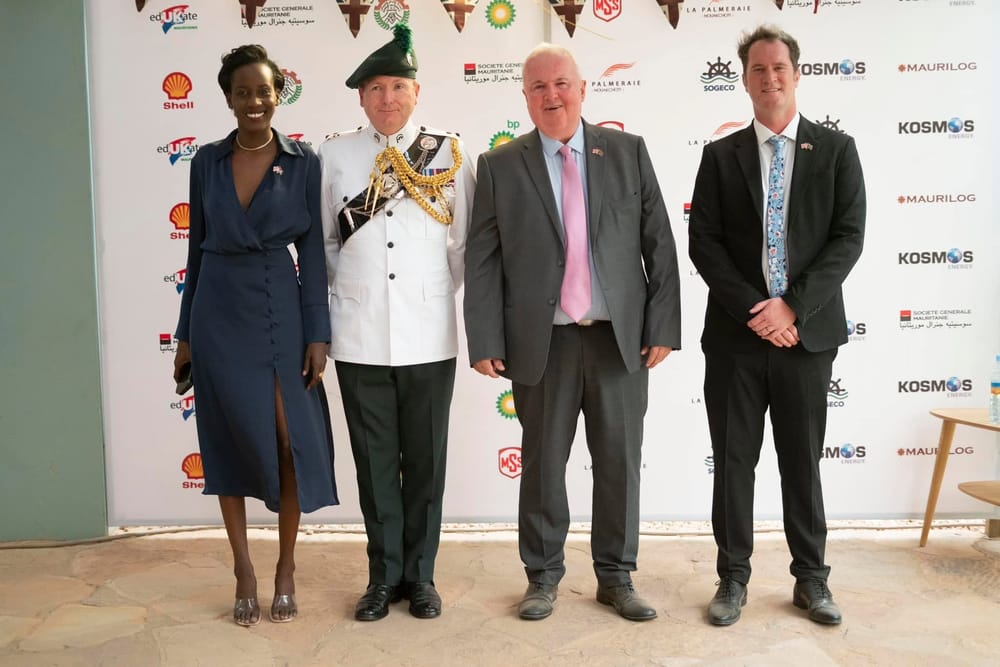
- British embassy staff in the African country of Mauritania have met with BP more than 40 times in recent years, as BP bid - ultimately successfully - for the right to drill a vast new gas field in the seas off the country. Indeed, Britain only posted a resident ambassador to the country in 2018, shortly after the gas field was discovered. Shortly after the field was discovered in 2017, Britain appointed a former Shell lobbyist to the post.
- In February 2026, as BP sought rights to open up a new gas field in Uzbekistan, the company’s Azerbaijani vice president for the Caspian region was appointed an honourary OBE at the British embassy in Baku. Staff from the Azerbaijani embassy met with BP representatives nine times between July 2024 and August 2025.
- British diplomats at the consulate-general in Houston, Texas had six formal meetings with BP staff between November 2024 and February 2026, culminating in the Consulate posting celebrations of BP expanding its oil drilling in the state on its LinkedIn account.
- Multiple embassies in countries where Shell or BP sought new oil contracts have allowed the companies to be prominent sponsors of events such as birthday parties for King Charles, leading to accusations of reputation laundering.
Ellie Chowns, Foreign Affairs spokesperson for the Green Party of England and Wales, said, “Reports of British diplomats helping to secure further fossil fuel expansion abroad are beyond belief – representatives of the UK government should be working to promote UK values and strengthen international relationships, not acting as cheerleaders for climate-wrecking oil and gas giants like BP.”
“The scientific consensus is crystal clear: we need to urgently ramp up our climate action if we are to avoid catastrophe. The UK must recognise this and demonstrate the political integrity to stand up to vested interests like oil and gas corporations, not support them in causing further damage to our planet.”
The research also reveals that Shell and BP are regularly allowed to sponsor events at British embassies around the world.
Chris Gerrard is co-director of the group Culture Unstained, which campaigns against the fossil fuel sponsorship of culture. He said, “these embassies are engaged in a form of reputation laundering by helping BP and Shell to present themselves as respected corporate citizens and champions of UK plc, rather than the profit-making polluters they actually are. Sponsoring these swanky events only aids these oil giants in deflecting attention from their links to human rights abuses, genocide and climate breakdown.”
I asked the Foreign Office months ago if it wanted to respond to the claim that all of this activity directly undermines the UK's own widely professed climate ambitions, and is therefore contrary to the national interest. It didn’t.


Member discussion: